
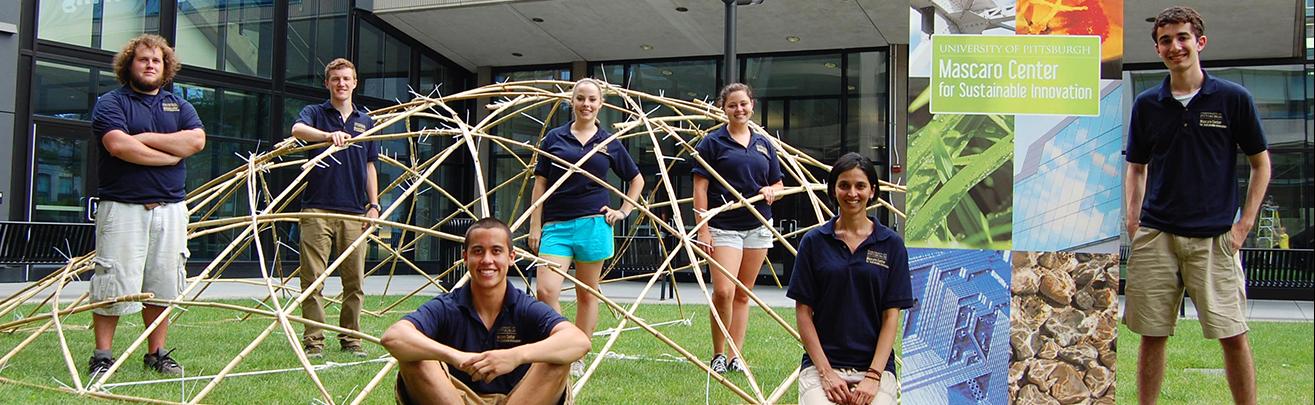
MCSI is leading University efforts to infuse sustainability into undergraduate and graduate education and coordinate service learning and cross-disciplinary academic collaborations across campus.
- Undergraduate Sustainability Learning Outcomes
-
Pitt's University-wide Undergraduate Sustainability learning outcomes are as follows:
- Students will develop the basic competencies needed by science, engineering, and humanities graduates to contribute quickly and effectively to the development and ultimate use of sustainable technologies, science, and practices in the U.S. and abroad.
- Students will develop analytical skills and learn to think critically about sustainability.
- Students will be able to seamlessly incorporate sustainability into knowledge from their core course of study.
Courses across the University that have the Sustainability course attribute connect to some, if not all, of the following outcomes:
- Students will be able to explain sustainability as an integrated concept within the discipline or course, highlighting the interaction and tradeoffs between ecological, social and economic systems used to support human society.
- Students will articulate current issues and relate them to the Sustainable Development Goal(s).
- Students will propose/build solutions to sustainability challenges and articulate why they are more sustainable to a broad audience.
- Students will consider the ethical dimensions of decisions meant to improve sustainability, working together with other students in converging fields to foster conversation and collaboration between disciplines.
- Students will be able to consider sustainability at multiple scales in accordance with the problem.

The Undergraduate Certificate in Sustainability aims to provide the opportunity to enhance students' education by including sustainability in their course of study. This certificate is open to all undergraduate students.

The primary goals of the Sustainability Distinction are to provide undergraduate students with a mechanism to gain recognition and “credit” for their outside-the-classroom endeavors and broaden the number of undergraduate students participating in sustainability activities throughout campus.
Watch for more information on the new Innovation Distinction—coming soon!

The Engineering for Humanity Certificate both guides and formalizes undergraduate student participation in engineering projects that serve marginalized communities while being environmentally and socially sustainable. This certificate is open to all undergraduate students.

Learn about the variety of research opportunities for students at both undergraduate and master's levels through MCSI, including the annual summer research program.

Pitt students: Take advantage of these funding opportunities for a sustainability-based project, and learn more about student and affiliate organizations at the University.